Leva's heart scanning
Our heart scanning with CT is the only method that provides detailed images of the vessels that supply oxygen to the heart. The best way to detect if you're at risk of sudden heart attack – for those from age 40.
Book nowTwo examinations for your heart
If you are in the risk zone, you get the opportunity to do the type of heart scanning that suits you best.
CT heart scan. An advanced scan where we produce a complete image of the coronary arteries – the blood vessels that supply the heart with oxygen.
SEK 8,950Calcium score. A simpler scan that provides an overview of the amount of calcium in the coronary arteries. Calcium in the coronary arteries is only seen if you have developed atherosclerosis.
SEK 3,250The examinations are performed at leading clinics in Stockholm, Gothenburg and Uppsala.
Heart scanning can save your life
Standard blood tests and blood pressure show your risk level – but not whether you have atherosclerosis in your coronary arteries. Leva's scanning offers:
- The only method that detects atherosclerosis
- Reduced risk of sudden heart attack through early detection
- Peace of mind that your vessels are healthy
The examination takes just a few minutes – but can save a life.
Book nowWhat are we looking for?
Atherosclerosis is a process that begins long before symptoms appear. When blood vessel walls are exposed to risk factors such as heredity, high blood pressure, smoking, high blood lipids or diabetes, small injuries can occur in the vessel wall.
The body tries to repair these injuries, but the process often leads to fat particles (cholesterol) being deposited in the vessel wall. Over time, these build up and develop into so-called plaques.
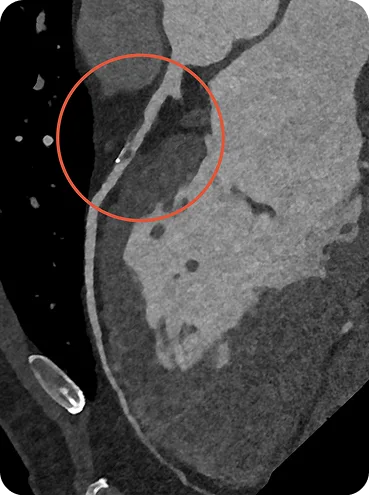
Different types of plaque in the vessels
Plaques can consist of softer plaque or calcified plaque. Softer plaque contains fat and cholesterol, and is visible on an Advanced heart scan. Calcified plaque contains calcium, making them hard and visible on both Advanced and Simple heart scans.
As plaques grow, they can push into the open channel where blood flows and cause narrowing. This can impair blood flow to the heart, which in the worst case leads to angina or heart attack. How much narrowing you may have is visible on an Advanced examination.
The most dangerous scenario is when a plaque ruptures. A blood clot can then quickly form and completely block blood flow in the coronary artery – this is often what causes an acute heart attack.
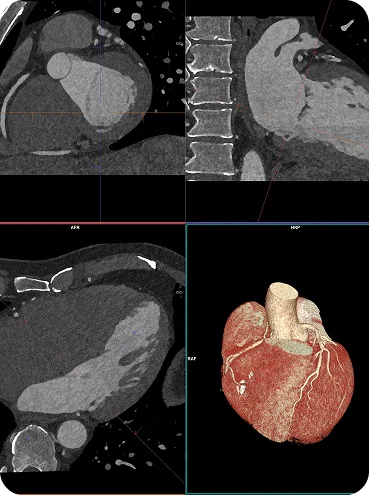
Has anyone in your family been affected before?
Heredity increases the risk of heart attack. You may feel healthy today, but most people who are affected have never had any symptoms before. If a family member has been affected, it may be especially important to check how your heart is doing.
Book now